is at a turning point
is at a turning point
Every few years another benchmark became the industry’s obsession. First availability, then modularity, then energy efficiency. Power Usage Effectiveness became the language we all spoke because it gave us something measurable to improve.
Those improvements created the modern digital economy. Without them there would be no hyperscale cloud providers, no global streaming platforms and certainly no artificial intelligence revolution unfolding today.
The constraint has moved
While we were becoming better at building data centers, the world around them was changing much faster than many of us realised. Our industry still behaves as if solving design and financing means the project will get built. That used to be true. It isn’t anymore. We still spend a great deal of time discussing layouts, PUE, cooling strategies and construction speed. Meanwhile, the real challenges have moved somewhere else.
In many key markets, the defining question is no longer simply whether we can design the next data center, but whether we can secure sufficient power to operate it. That may sound like an obvious distinction, but I believe it changes almost everything. For many years a successful project followed a relatively predictable path. Secure the investment, identify the right location, complete the design, obtain the necessary approvals and build. Engineering excellence was the differentiator because engineering was usually the most complex part of the process.
Increasingly, that is no longer true. Projects are delayed because electrical infrastructure is unavailable. Grid connection timelines stretch far beyond construction schedules. Planning approvals become politically sensitive. Local communities ask questions that were rarely asked a decade ago. Governments are forced to balance industrial growth against national energy security, climate targets and competing infrastructure priorities. The bottleneck has quietly moved.
Ironically, the industry that exists to enable digital transformation is becoming increasingly dependent on challenges that have very little to do with digital technology. Electricity has become the defining strategic resource. That reality forces us to think differently about what a data center actually is.
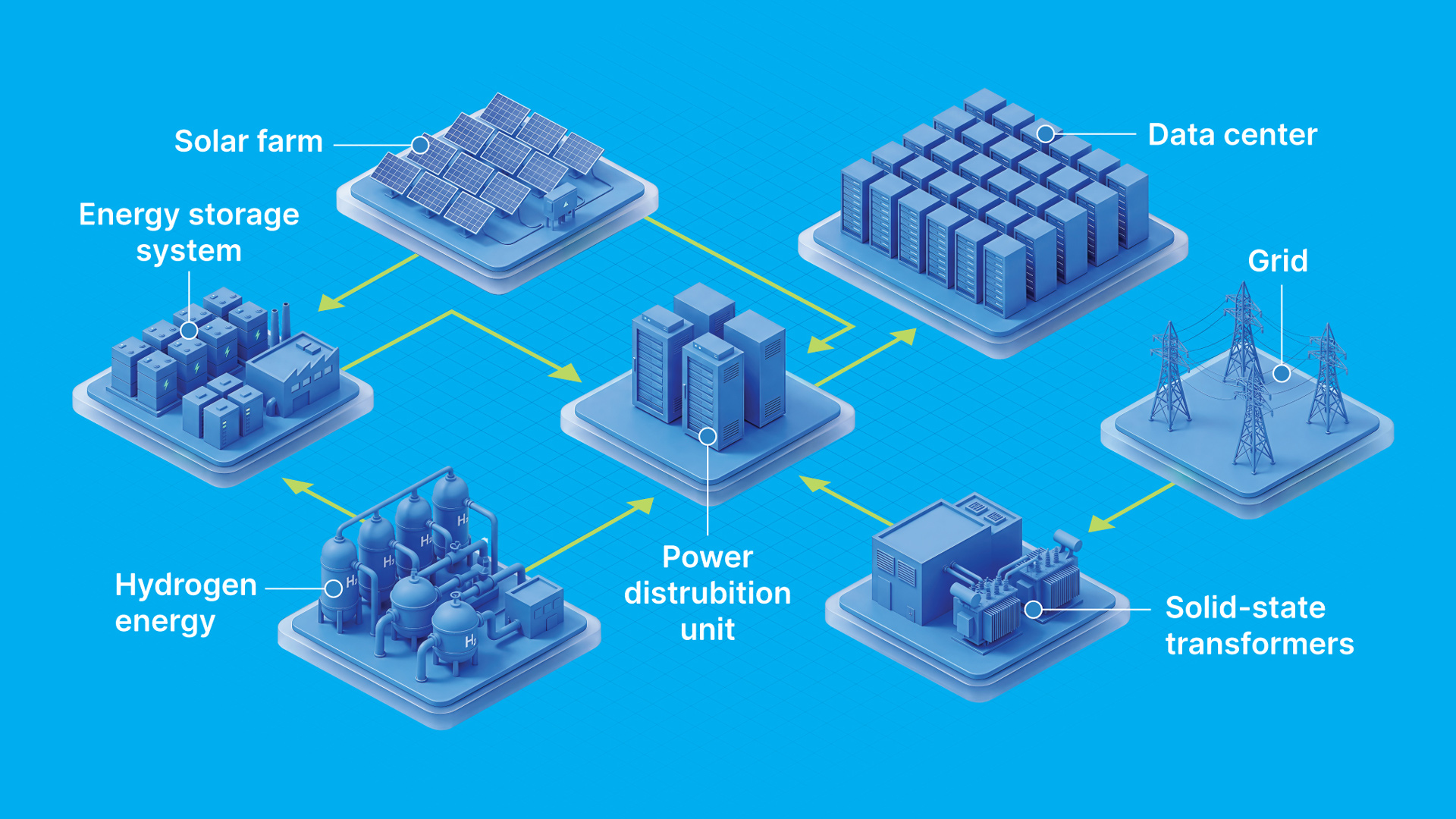
For decades, energy was simply something the data centers consumed. As long as power was available, the conversation focused on how efficiently we used it. Today, energy itself has become the defining limitation. It determines where new capacity can be built, how quickly it can scale and whether future AI infrastructure is possible at all. That is why I believe we need to rethink what a data center actually is. It is no longer just digital infrastructure; it’s becoming critical energy infrastructure.
AI is more than a software revolution
We often describe AI as a software revolution. From where I stand, it is equally an infrastructure revolution. According to the IEA, global data center electricity consumption reached approximately 415 TWh in 2024 and is projected to increase to around 945 TWh by 2030 under the base-case scenario.
Artificial Intelligence is changing what data centers fundamentally are. They are evolving from digital infrastructure that consumes energy into energy infrastructure that enables digital economies. Previous generations of enterprise computing evolved gradually. Every few years servers became more powerful, workloads increased and infrastructure adapted accordingly. Engineers had time to optimise designs, operators learned from experience and technologies matured at a manageable pace. AI has compressed that entire process.
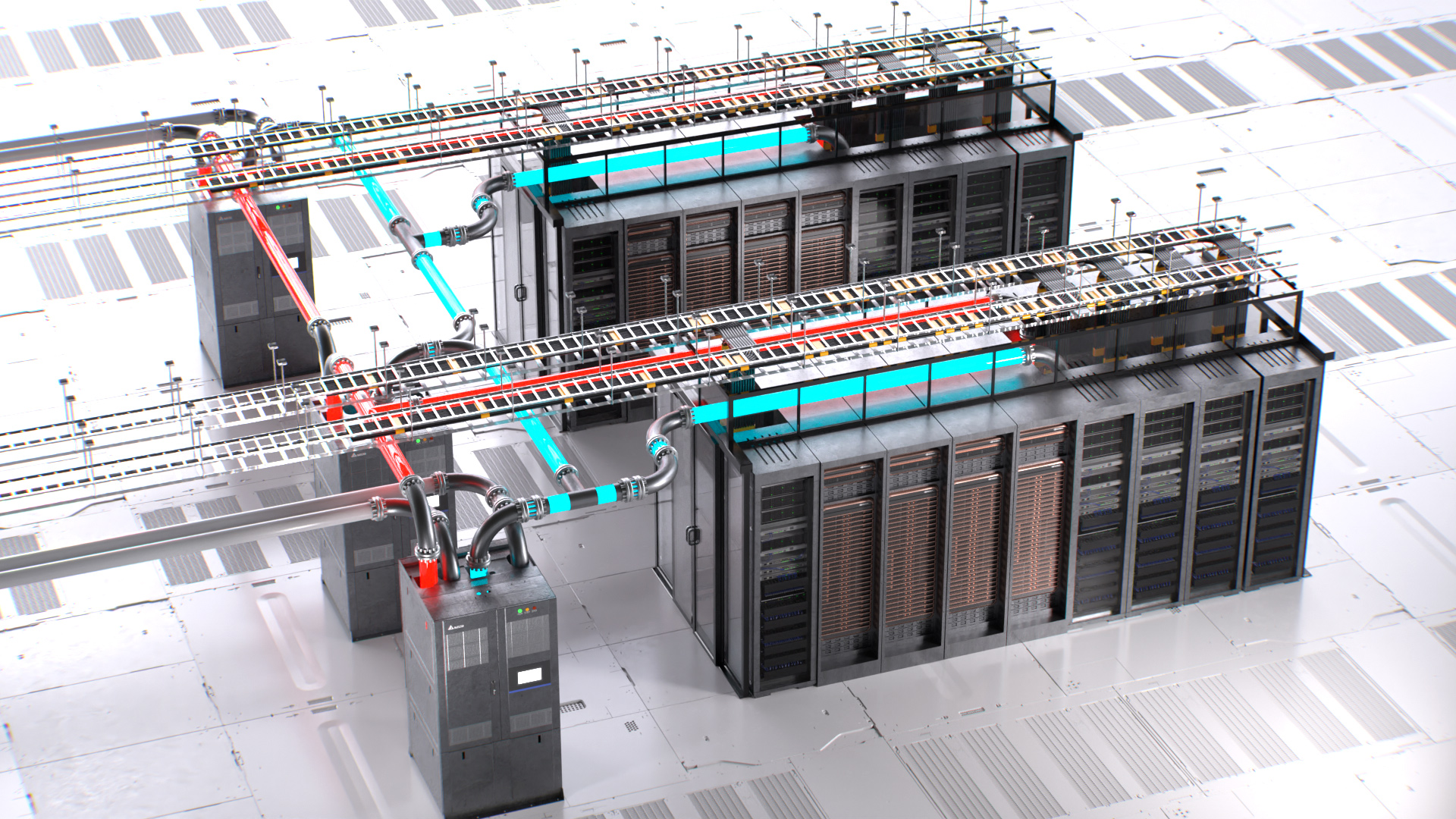
The increase in computing density has happened so rapidly that many of the assumptions underpinning today’s infrastructure are beginning to reach their natural limits. What was considered high density only a few years ago is now becoming standard practice. The pace of change is unprecedented. Conventional enterprise racks have traditionally operated at 10-20kW, whereas today’s AI deployments increasingly require 100-150 kW per rack, with next-generation platforms expected to exceed 250 kW.
Physics always wins
Facilities were originally designed for conventional enterprise workloads but they are now suddenly expected to support AI clusters requiring several times the electrical capacity and thermal performance. That changes the engineering discussion completely.
There is a tendency in every industry to assume that existing technologies can simply be optimised a little further. We become comfortable with incremental progress because it has worked before.
Air cooling illustrates this perfectly. For decades it has been one of the great success stories of our industry. Continuous improvements in airflow management, containment strategies and equipment design have allowed operators to support workloads that previous generations would have considered impossible; it has been an extraordinary engineering achievement.
But every technology eventually encounters limits that cannot be overcome simply through optimisation. At some point the conversation stops being about engineering creativity and starts becoming about physics. But physics does not negotiate; heat must go somewhere and energy must be supplied.
Power losses cannot simply be wished away because project schedules are ambitious or budgets are limited. This is why I increasingly view liquid cooling as rapidly moving from an optional solution to a foundational requirement for high-density AI and HPC environments.
The technology is not the challenge; the mindset is. The challenge is whether organisations are prepared to redesign the way they think about infrastructure before external circumstances force them to do so. That, in my experience, is always the more difficult transition. Often technology changes faster than organisations do.
Designing for a future we cannot yet see
Many of the projects currently being designed will operate for twenty years or more. The decisions made today will shape infrastructure that is expected to operate for decades. Many of those facilities will support workloads that don’t even exist yet.
The biggest risk is not that we build the wrong infrastructure – it’s that we keep optimising for a world that is already disappearing. Too often we evaluate projects according to present-day requirements because those requirements are measurable. Future demand is uncertain, so it becomes easier to postpone difficult decisions. That may reduce capital expenditure today but it often increases strategic risk tomorrow.
The organisations that succeed over the next decade will not necessarily be those that minimise today’s investment; they will be those that minimise tomorrow’s challenges. And increasingly, those challenges have very little to do with servers themselves. They have everything to do with the energy ecosystem that surrounds them.
Why PUE is no longer enough
One consequence of this shift is that it challenges some of the assumptions our industry has relied on for years. One of the clearest examples is how we measure success.
For a long time, Power Usage Effectiveness has been the benchmark by which data centers judge themselves. It has undoubtedly helped improve efficiency across the industry and encouraged operators to reduce unnecessary energy consumption. I would never argue that PUE is irrelevant. It remains a valuable operational metric, but it increasingly answers yesterday’s question rather than tomorrow’s challenge. When a single number becomes the dominant measure of success, there is always a danger that we optimise for the number rather than for the outcome it was originally intended to represent.
AI exposes that limitation. A facility with an excellent PUE may still struggle to support high-density compute efficiently but another facility with a slightly higher PUE may deliver significantly more usable computational capacity because its electrical architecture, cooling strategy and operational flexibility were designed around entirely different priorities.
That is why I increasingly find myself thinking less about how efficiently energy enters a building and more about how effectively it is converted into reliable computing capability.
Perhaps then the more important question is no longer, “what is your PUE?” but “how much reliable AI compute can you sustain for every megawatt available?” Those are two very different conversations where one focuses on the efficiency of the facility and the other focuses on the effectiveness of the infrastructure.
From components to systems
As AI continues to reshape demand, I believe that distinction will become increasingly important. This is also changing the way we think about engineering itself.
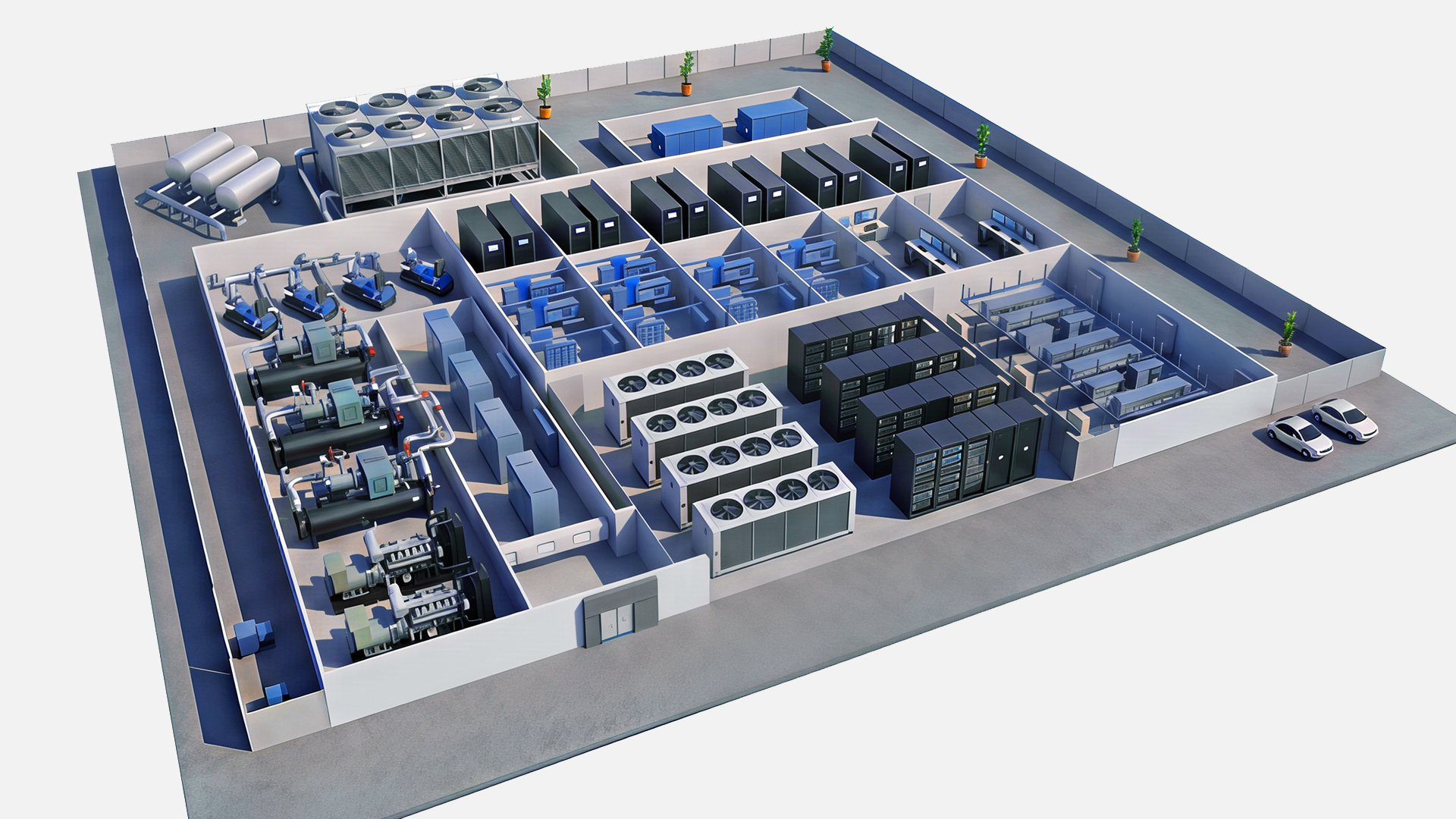
For decades we designed power, cooling and IT as separate systems. AI no longer allows us to do that. Every decision in one area now affects performance somewhere else. The challenge is no longer optimizing individual systems. It is to understand how the entire infrastructure behaves as one integrated system.
That may sound like a subtle distinction, but I believe it represents one of the biggest mindset shifts our industry must make over the coming years. Too often we still optimize individual systems while assuming the whole will automatically become optimal as well. While small changes in one part of the system will affect on the result, we need to observe every decision from multiple angles; not only from the most obvious one.
Ultimately, I believe the future is not about building better individual products. It is about designing better integrated infrastructure. The greatest opportunities will come from understanding how power, cooling, and IT interact as a single system rather than treating them as isolated technologies.
Redundancy does not guarantee resilience
Some of the most valuable lessons I have learned throughout my career came not from catastrophic failures but from situations where, technically speaking, nothing actually failed. Every component was functioning exactly as designed, redundancy existed as planned and all the calculations were correct. Yet the system behaved differently under real operating conditions than anyone expected.
Partial loading, unexpected control behaviour, delayed responses between interconnected systems; individually these issues appeared manageable. Together they created operating conditions that increased temperatures faster than the infrastructure could stabilize itself.
Nothing had failed and nothing was broken but the system wasn’t truly resilient. That experience fundamentally changed the questions I ask during infrastructure discussions; I no longer begin by asking whether a design is redundant – I ask how it behaves when reality refuses to follow the design assumptions.
Everything should work during normal operation; that is the expectation for any technical product. True resilience reveals itself during uncertainty. As workloads become denser and businesses grow increasingly dependent on continuous computing, the difference between redundancy and resilience becomes more significant. A minor cooling issue is no longer merely a facility concern: it can quickly become a business continuity issue, directly affecting revenue, customer trust, regulatory compliance, and the AI-driven processes that organizations increasingly rely on.
Resilience is therefore not achieved simply by adding redundant capacity, but by ensuring that the infrastructure responds predictably to dynamic operating conditions. Control-loop delays, thermal ramp rates, partial-load cooling behavior, and rapidly changing AI workloads all influence whether the system can absorb disturbances without compromising compute performance or service availability.
Why commercial models must evolve
Infrastructure decisions therefore carry strategic consequences far beyond the data center itself and that’s also why I believe our commercial relationships need to evolve. Too many infrastructure decisions are still rewarded for being delivered on time rather than performing over the next twenty years. I believe that needs to change.
The value of infrastructure is increasingly determined after commissioning rather than before it. We find ourselves asking questions such as “can the facility adapt to changing workloads” or “can capacity increase without major redesign”. Will the performance remain stable under operating conditions that were impossible to predict when construction began? Those questions define long-term value far more than whether delivery occurred exactly on schedule.
I believe we should begin moving towards outcome-based partnerships that reward measurable operational performance rather than simply successful equipment delivery. Infrastructure should not merely be installed; it should continuously prove its value throughout its operational life.
Sustainability and performance are not opposites
Perhaps the greatest misconception I still encounter is the idea that sustainability and performance somehow compete with one another. I see the opposite. The most sustainable infrastructure is often also the highest-performing infrastructure. Reducing unnecessary power conversion stages improves both efficiency and reliability. When we are designing thermal systems that support higher operating temperatures, we reduce waste while increasing operational flexibility. If we understand the workload behaviour, we’ll enable better energy utilisation and greater computing output.
Performance and sustainability only appear to conflict when we measure the wrong things. Unfortunately, our industry sometimes spends too much time discussing sustainability as a reporting exercise rather than an engineering discipline.
Publishing ambitious targets is relatively easy but measuring operational reality is considerably harder. Still, the real progress begins with honest metrics. Those metrics should reflect how infrastructure actually performs rather than how we would like it to perform.
The Next Decade Will Belong to Integrated Infrastructure
If the past decade was about building larger data centers, I believe the coming decade will be about building smarter infrastructure. But not smarter because individual technologies become more sophisticated; smarter because we finally begin understanding the relationships between them.
Power, cooling, software, operational intelligence and energy management are converging into a single ecosystem. The organisations that recognise this earliest will operate more efficient facilities and adaptable businesses.
Looking ahead, I believe our industry will eventually look back on this period as a turning point. We may wonder why we spent so much time optimising decimal improvements in familiar metrics while the real competitive landscape was changing around us.
Every industry experiences moments when established assumptions quietly lose their relevance and I believe the data center industry is living through one of those moments now. Artificial intelligence hasn’t only increased demand for digital infrastructure – it has fundamentally changed what that infrastructure needs to be.
Artificial intelligence has changed more than workload requirements. It has changed what a data center fundamentally is and the organisations that succeed over the next decade will not simply build better facilities; they will make better decisions about energy, resilience, adaptability and long-term risk.
For years we have thought of data centers as digital infrastructure that consumes energy. I believe the opposite is increasingly true. Data centers are becoming critical energy infrastructure that enables the digital economy. Once we begin looking at data centers through that lens, many of the decisions facing our industry today become much clearer.